

CUSTOMERS





Digital success stories, told by our customers
Trusted by enterprises across Australia, with strategic expansion into the UAE and Saudi Arabia. Here's the proof.
NSW Government ICT Services Scheme— SCM0020ICN Gateway— Premium MemberISO 27001 —Certification in progress
10+Enterprise clientsAcross selected industries in Australia and the GCC.
15+Projects deliveredIn data, AI and technology, from pilot to production.
5Global hubsSydney, Dubai, Riyadh, Islamabad and New York.
5+Years operatingBuilding governed data and AI since 2021.

 CFO DashboardsADFWarehouseAutomated CFO dashboards delivered in six weeksExecutive CFO dashboards combining financial, operational, and forecasting data into a single reporting platform reducing manual effort while improving decision-making.Professional Services FirmRead case study →
 Enterprise RAGAI GovernancePurviewA secure enterprise RAG platform for a KSA government agencyAzure OpenAI-powered internal assistants deployed inside a secure government environment compliant AI adoption with governance controls intact.KSA Government AgencyRead case study →
 Azure OpenAIEnterprise RAGAI SearchA secure AI assistant for clinical knowledgeA private assistant on Azure OpenAI and AI Search giving clinicians grounded answers from clinical documentation with patient data never leaving the tenant.Healthcare OrganisationRead case study →
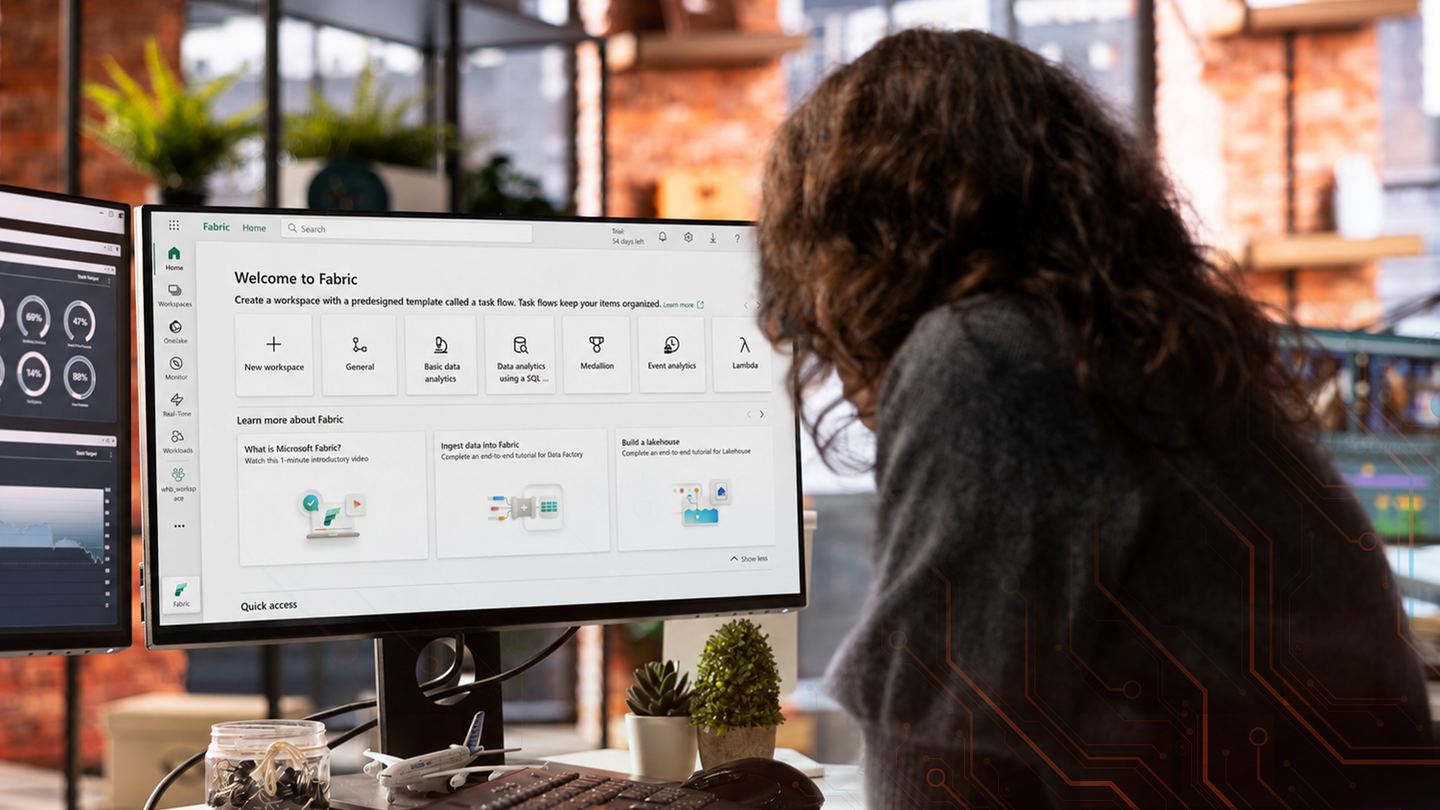 Microsoft FabricOneLakeReal-TimeUnified mining data on a real-time Microsoft Fabric platformPit-to-port operational data unified in OneLake with real-time intelligence one governed platform replacing more than a dozen disconnected systems.Mining EnterpriseRead case study →
 Data EngineeringADFIoTResilient data pipelines across energy operationsIoT and operational data engineered into dependable pipelines with Azure Data Factory reliable telemetry from field to boardroom.Oil & Gas OperatorRead case study →
 WarehouseStar SchemaPower BIA unified warehouse for real-time logistics insightsA star-schema warehouse feeding Power BI with live fleet, depot, and delivery performance one model for the whole network.Transport & Logistics GroupRead case study →
 Power BIBIFabricReplacing manual reporting with live Power BI dashboardsManual month-end packs replaced with governed, daily-refreshed Power BI dashboards on a Fabric foundation.Construction FirmRead case study →
 AzureCloudFabricModernising legacy rail systems on Microsoft AzureA phased migration of legacy systems onto Azure with a Fabric data layer lower run cost, zero-downtime cutover, and a platform ready for AI.Rail OperatorRead case study →
 PurviewGovernanceComplianceEnterprise-wide data governance and complianceMicrosoft Purview governance across the enterprise catalogued critical data, automated lineage, and audit-ready compliance.Water UtilityRead case study →
 Dynamics 365Customer 360AIA Customer 360 platform with AI-powered insightsDynamics 365 and a unified customer data model giving sales and service one complete view with AI surfacing churn risk and next best actions.IT & Communications ProviderRead case study →
 Agentic AIDocument IntelligenceAzureAI-assisted claims processing for an Australian insurerDocument intelligence and agent-assisted triage inside the existing claims workflow — faster decisions with every step traceable for audit.Australian Insurance GroupRead case study →
 Document IntelligencePower PlatformGovernanceAutomating document-heavy casework for a state agencyAI-assisted classification and extraction across a paper-heavy casework intake — shorter queues, with a case officer approving every outcome.Australian State AgencyRead case study →
 Power BIData PlatformHealthcareTheatre and patient-flow analytics for a hospital groupA governed data platform with daily Power BI dashboards for theatre utilisation and patient flow — capacity decisions made on today's numbers.Private Hospital GroupRead case study →
 Advanced AnalyticsIoTAzurePredictive asset analytics for an energy distributorFailure-risk scoring across the network's assets, feeding prioritised field work — maintenance spend moved from reactive to planned.Energy Distribution UtilityRead case study →
 Agentic AIService DeskCopilotAn AI service-desk agent for a managed services providerAn agent resolving routine tickets over the provider's own knowledge base — around-the-clock first response, with clean hand-offs to engineers.Managed Services ProviderRead case study →
" Commercial DirectorAustralian Tier-2 Builder, Sydney
By bridging the gap between site diaries and head office finance, we gained the ability to intervene on cost variances while they were still manageable.
Commercial DirectorAustralian Tier-2 Builder, SydneyOur partnerships with
industry leaders
 MicrosoftSolutions Partner
 Google CloudPartnerPARTNERpartner
network